
The skeleton factory doesn't exist
⏲ 6 min read
In Part 1 I told you where the face comes from: the myth, the four eyes, Harryhausen and the Crimson Ghost. I owed you the other half, so here it is — starting with the awkward bit.
The skeleton factory doesn't exist
We didn't go to Greece. There are plenty of ruined temples out there, but we didn't rent one and we didn't travel anywhere: ours was built on a computer, shot by shot, with AI tools. And the crew printing inside it are characters, not people in costume. The One-Eye, the Fat One in his bronze breastplate, the Skinny One with a pot on his head and the shy cyclops weren't anywhere before we invented them.
I'm saying it before someone else does, because otherwise it reads badly: a video about handmade craft, made with the fastest tool there is. And because that's exactly where the point is.
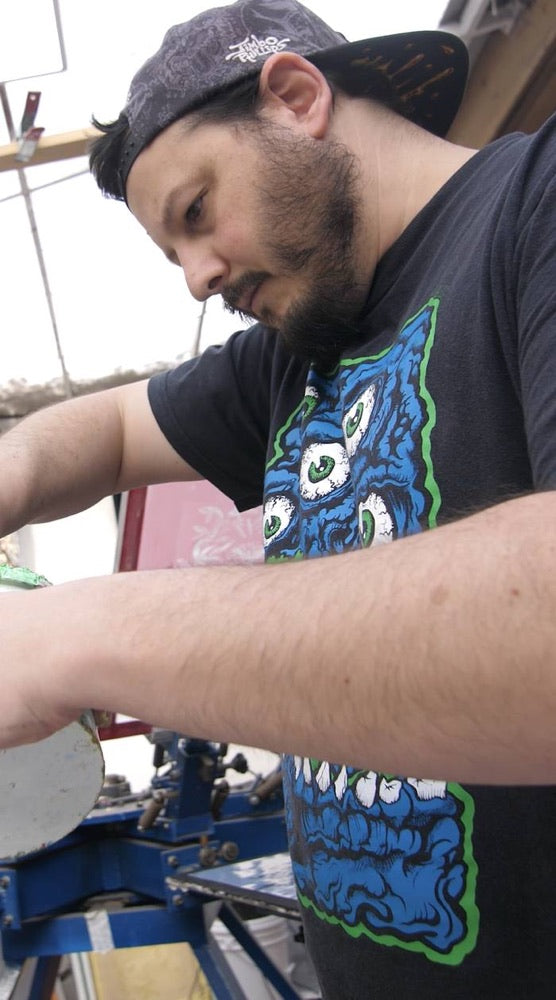
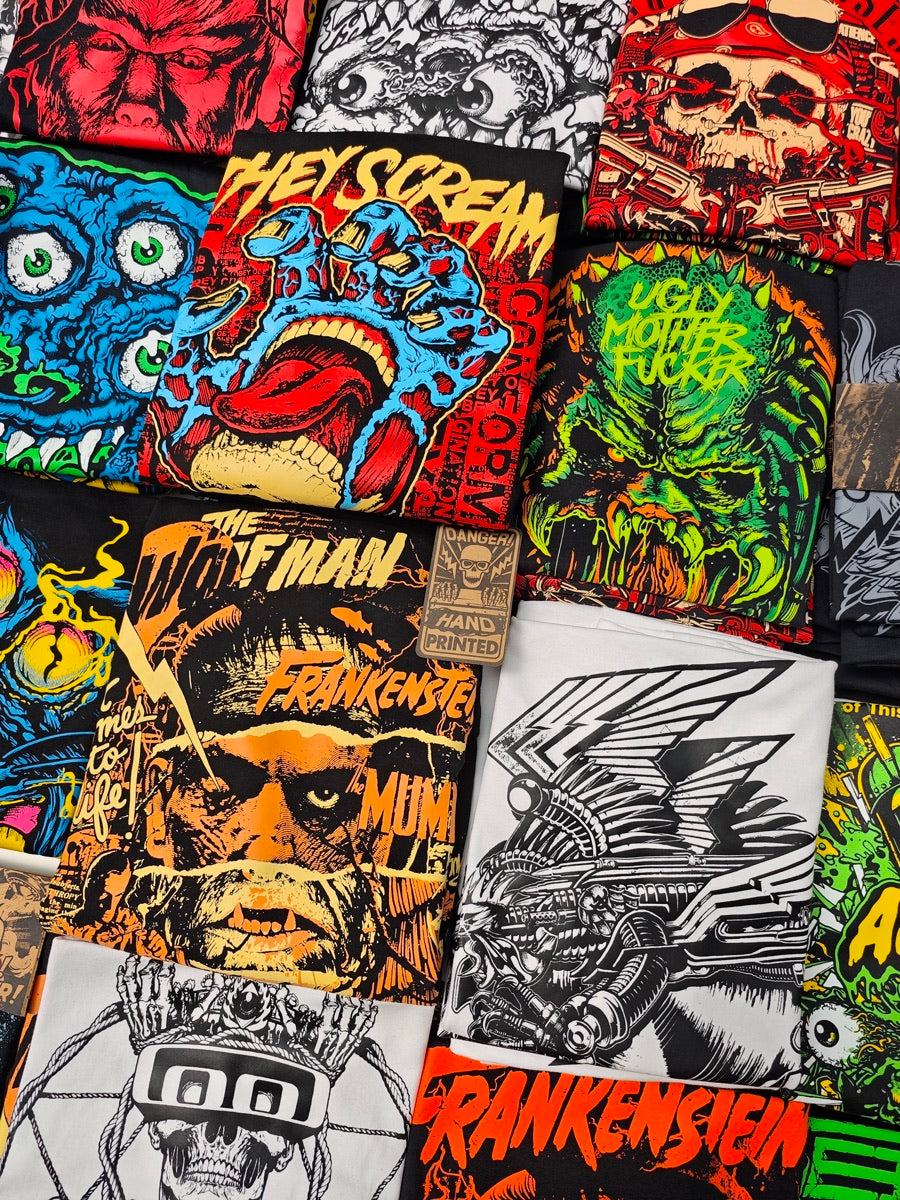
What does exist is a workshop. A six-arm press we call the Octopus, even though it only has two hands — mine. Buckets of ink. Screens leaning against the wall. A wall of printed shirts that ran out of room. And a Medusa that has to be printed by hand, one at a time, with no shortcut available, because for this part nobody has invented one yet.
That contrast is the whole thing. I can build a ruined temple in an afternoon. I cannot make a hundred shirts in an afternoon. And of those two, the only one that arrives at your door is the second.

What's real starts with a pencil
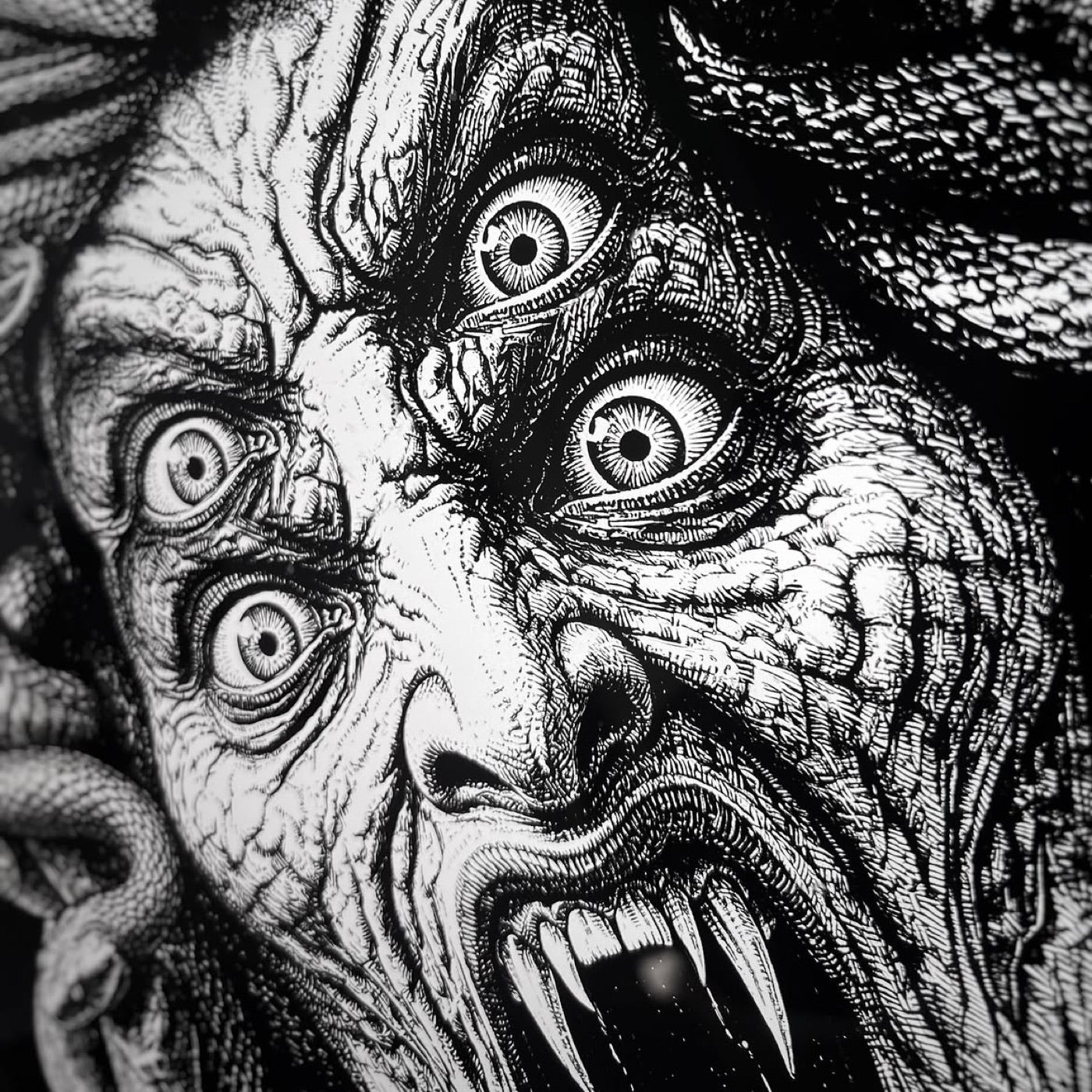
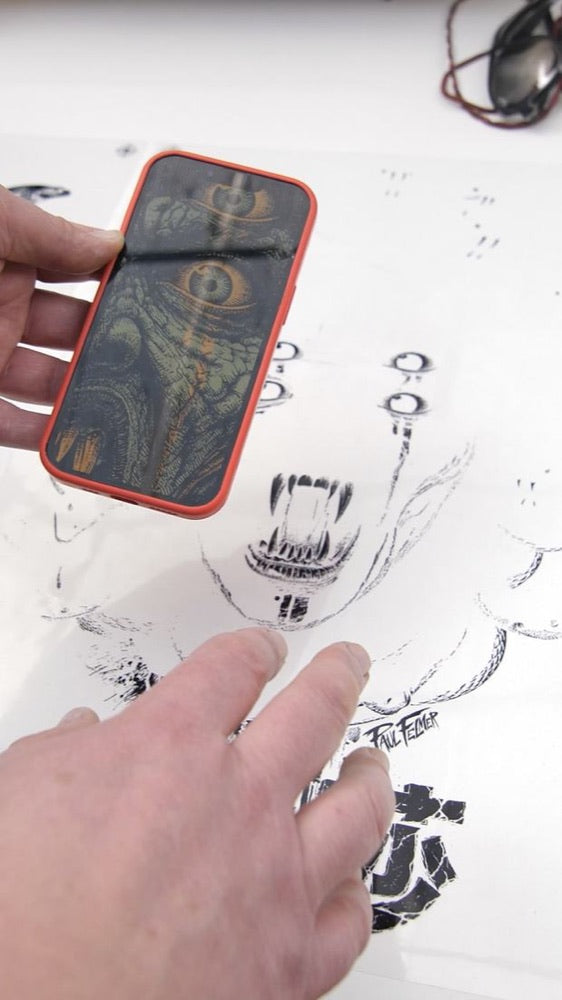
I drew Medusa by hand. A 2B pencil and HB leads on 250g Canson paper, same as everything in the catalogue starts. There's no sketch that comes out right the first time and gets sent off: there are dozens of versions, layers on layers, lines that leave and come back. The four eyes showed up while drawing, not while planning.
Then comes digitising, which isn't pressing a button either. It's an edit that respects the paper's texture and the pencil's pressure — the imperfections that make the design feel handmade, because it is. Clean those off and you're left with a dead drawing.
Two films, two screens, eighteen passes
Here's the part people don't see.
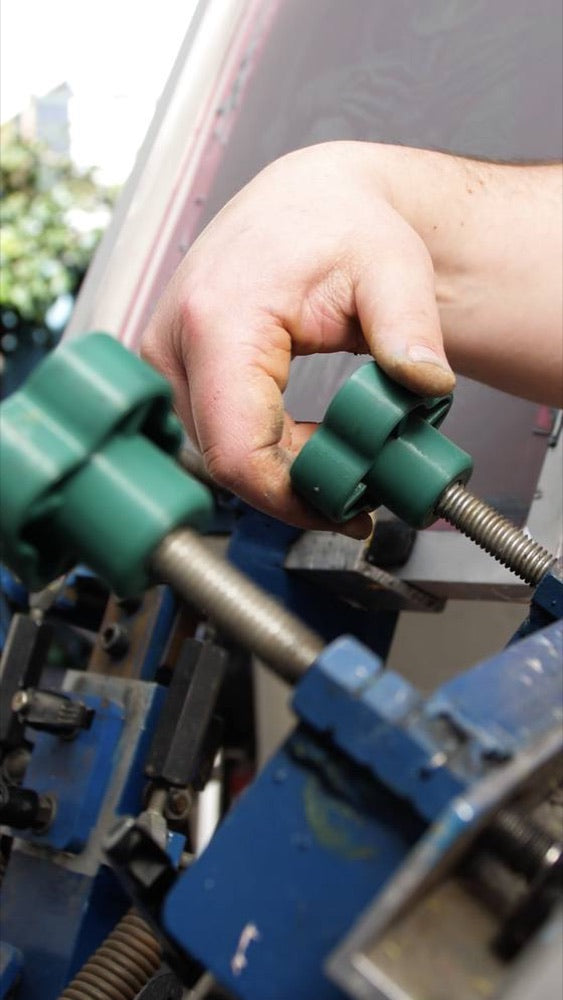
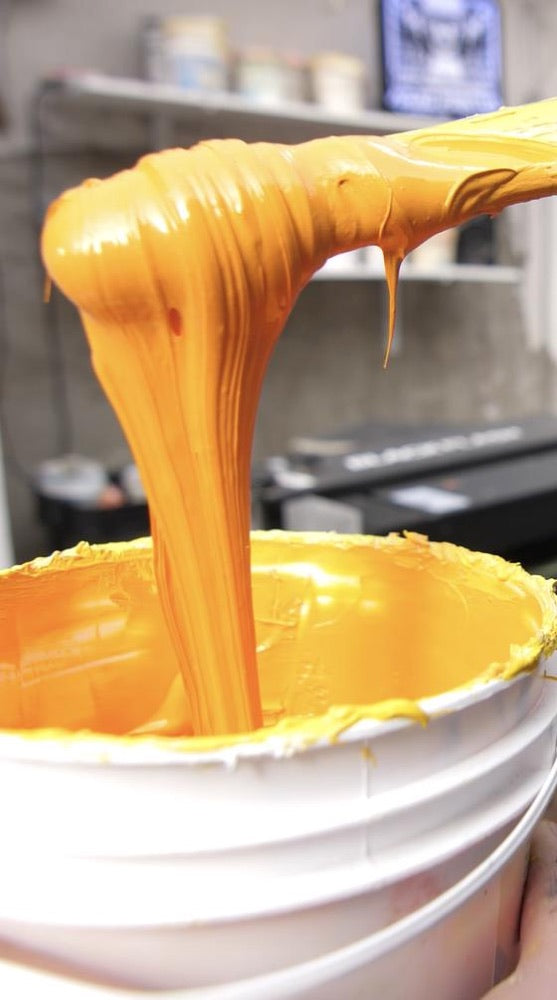
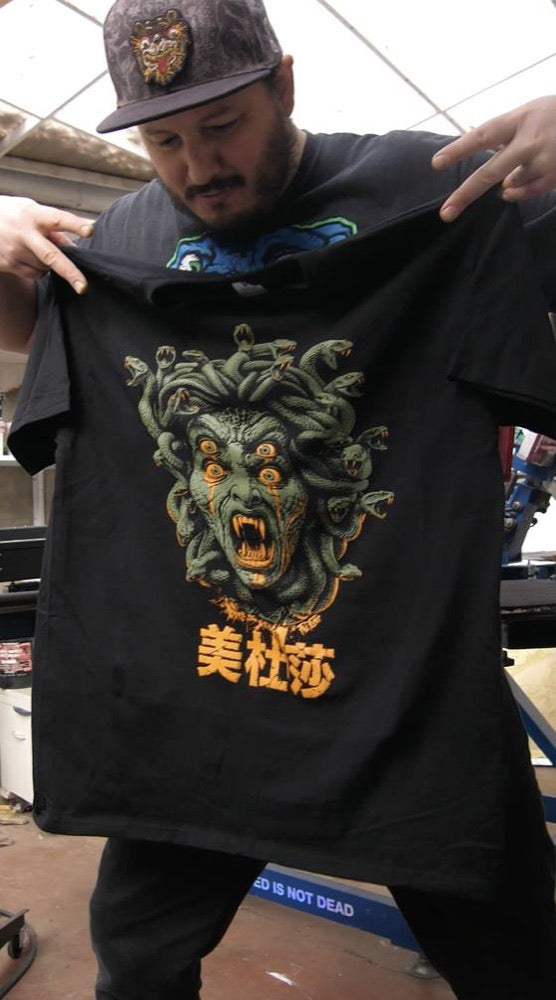
Medusa carries two inks on black cotton: olive green and amber orange. Two inks means two color separations, two films burned onto photopolymer emulsion and two different screens. The screen is developed, dried, mounted on the Octopus and squared up by hand and by eye until both layers line up.
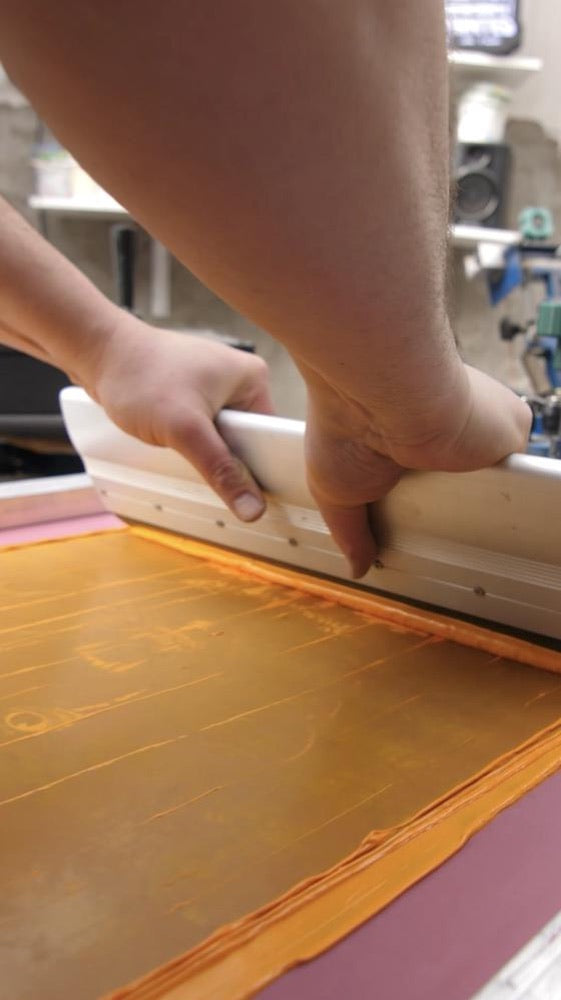
And here's the part nobody pictures when they look at a printed shirt. For each ink you pull the squeegee three times, the garment goes into the flash dryer to set, and that routine repeats three times over. Nine pulls and three flash-dries per color. With both inks: eighteen squeegee pulls and six trips through the dryer on every single shirt. That's what it takes for the green and the orange to actually cover on black instead of being swallowed by the fabric.
And lining up means lining up. One millimetre off and the garment is scrapped. There's no fixing it afterwards: the ink is already in the fibre. That's why, before the first good shirt, there are tests, and more tests, until the registration sits exactly where it has to.

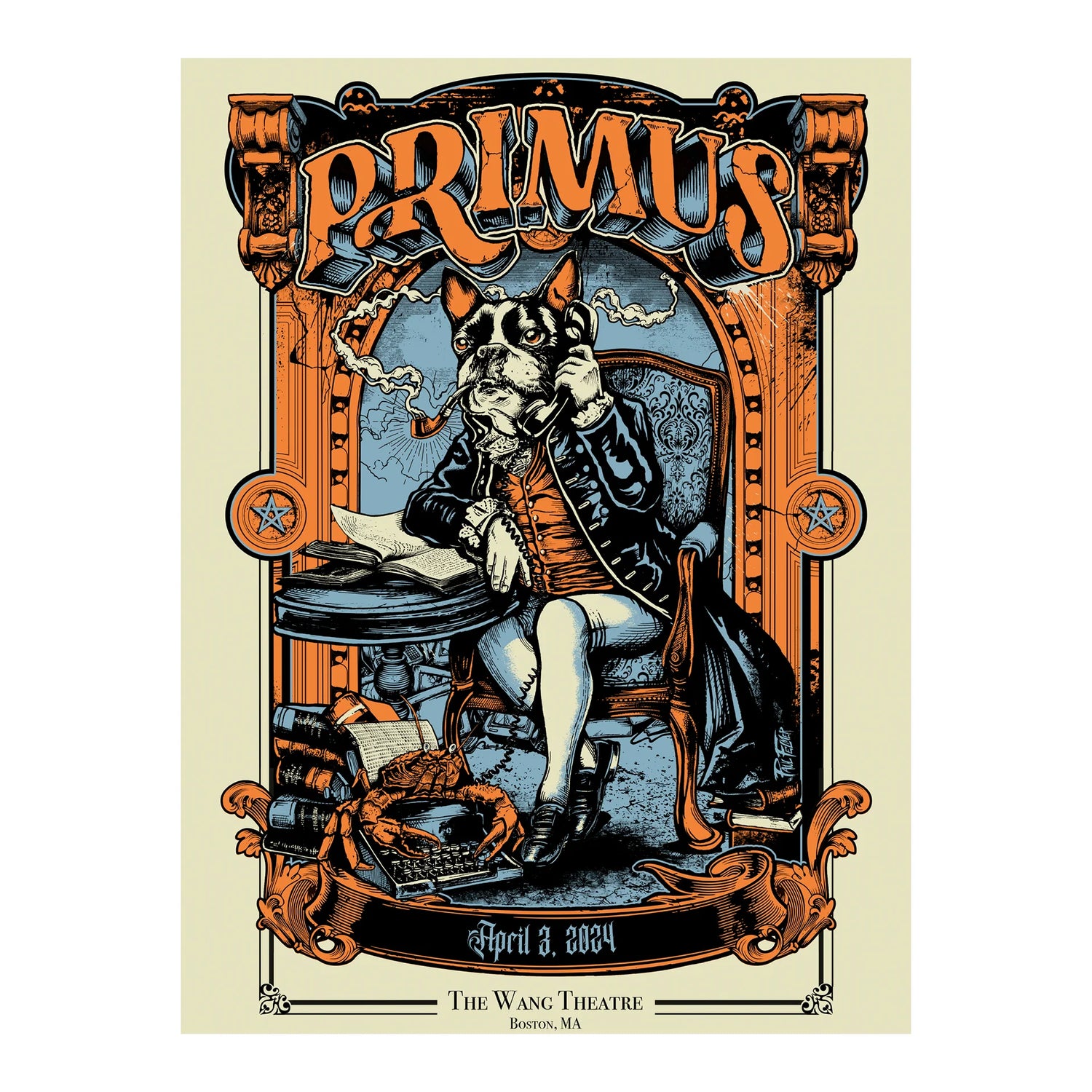
That poster is almost ninety years old and it's built on exactly the same logic as the shirt in your hands: every flat color is a screen, a pass, a chance to ruin it. The ink changed, the emulsion changed, the press changed. The problem is the same.
One by one, and no two alike
The ink doesn't sit on top of the fabric: it's pressed and cured into it. That's why it survives wash after wash, and why you can feel it with a finger — it has body, it has relief. A digital print doesn't do that, and never will.
Because every garment goes through the press by hand, no two are identical. There are micro-differences in pressure, in ink load, in millimetres. That's not a flaw in the system: it is the system. It's the difference between a manufactured object and an object printed by somebody.
The tee carries the artwork on the front. Zip hoodies are printed on both sides, badge in front and the full artwork across the back. And all of them carry an author's label, because somebody made them.
I can invent a temple in an afternoon. I can't rush a squeegee pass. That's the whole difference.
Product photos


Why the skeleton video landed
Now the strange part. The skeleton factory video took off on social, and when I went to read the comments expecting people to talk about the Crimson or the skeletons, it turned out they were asking about the shirt. About how it was printed. About whether it was real.
If you haven't seen it, here it is: on YouTube and on Instagram.
I think it works like this: the fantasy is the door, but what people want to know is whether there's something real behind it. The temple is the bait. The workshop is what's there.
And then we made the behind-the-scenes. Also fake.
There's the crew, filthy and hugging, celebrating the last day. The skeleton gang posing next to a film camera. Someone pulling focus on an ARRI inside the temple. Nobody travelled, nobody got sunburnt, that camera never rolled and that shoot never happened. They're photos from a film that was never shot.


We could have said nothing and no one would have noticed. But saying it takes nothing away — it adds. The myth grows when you get to see backstage, even when backstage is as invented as the myth. And it makes plain what we can do: this content is made by Potrero Films, our production company, Paul's other house. The same pair of hands that prints the shirts puts the films together.

The Crimson will deny all of it, obviously. He still insists the factory is his, that the skeletons are his employees and that the Medusa hanging from the ceiling is part of the furniture. Let him. He's a prop, like his two-dollar mask, and it's been working for seventy-nine years.
That's the whole process: a pencil drawing, two screens, eighteen passes and no shirt quite like the next.
100% cotton tee. Professional two-ink screen printing, front print. Hand printed, one by one. The design also comes as a zip hoodie and a polo sweatshirt.
Frequently asked questions
Save more with a pack
The Medusa campaign pack, over on the series landing page

Medusa Pack
A zip hoodie of your choice + a tee of your choice + a sticker pack. All for $58.490 instead of $73.980.
See the pack →Other designs
See allLoading...